
Why did I spend $80 on a talking giraffe when all my 9-month-old wanted was the cardboard box it came in?
I made the rookie mistake of thinking a higher price tag meant better development. I shelled out big money for a massive electronic learning center that promised 30 songs and 5 learning modes. My baby took one look at its blinking, overstimulating facade, and then spent the next 45 minutes trying to chew on the TV remote. Total waste of cash and a hilarious reality check.
Stop chasing the ‘must-have’ toys for 9 month old lists. This post breaks down a simple framework for choosing intentional toys—the ones that genuinely support key developmental milestones and, crucially, spark a look of pure joy on your baby’s face.
(Disclosure: This post contains affiliate links! As an affiliate, I may receive a small commission at no extra cost to you. I purchased some of this product myself to provide a completely honest review. All opinions are my own. Thank you for supporting Blessed Cute Babies!)
Is Your Toy Collection Over-Stimulating or Under-Performing?
The common misconception is that a toy has to be complex, electronic, or brightly colored to be developmental. The core challenge is that we confuse ‘entertainment’ (a toy that does the work) with ‘engagement’ (a toy that requires the baby to do the work).
Why should the reader care? Because the clutter and the noise aren’t just annoying; they are a barrier to building crucial fine motor skills and focus. Less is truly more when it comes to effective open-ended play.
The “Aha!” Moment
My ‘Aha!’ moment happened one afternoon watching my son completely ignore his flashing, singing plastic car. Instead, he was fixated on a simple, empty Tupperware container, spending ten glorious minutes figuring out how to lift the lid off and put it back on. That specific event, the simple plastic container becoming an engineering puzzle, made me realize the best toys don’t do anything. They only ask: ‘What can you do with me?’
A two-step method for selecting high-impact, low-clutter toys for 9 month old
Step 1: The One-Skill, One-Toy Rule (Focusing on Handling & Manipulation)
This step is non-negotiable because it eliminates overstimulation. Every toy should primarily target one developmental milestone (e.g., stacking, cause-and-effect, object permanence). It prevents babies from getting overwhelmed by too many options.
This rule creates focused playtime, which helps babies build confidence because the success criteria are clear. It’s the antidote to the “throw the toy and move on” boredom.
The Stacking Ring Mistake: When “Learning” Toys Are Too Early
Melissa & Doug Rainbow Stacker
I bought a classic wooden stacking ring set (The Melissa & Doug Rainbow Stacker) at seven months, which was too early. My failure was trying to teach him to stack in order. I’d grab his hand and try to guide it. The lesson I learned? The purpose isn’t stacking; the purpose is handling the rings. The failure taught me to let him chew, bang, and roll them first—the stacking will come later. Focus on the process at nine months.
Step 2: The ‘Tool’ Test (The Simple Necessity for Cause-and-Effect)
How this step builds on the first. After identifying the skill, the toy itself should function as a tool for the baby’s own exploration, not a source of passive entertainment. This is where open-ended play comes in.
You turn a thirty-second distraction into a ten-minute focused activity, giving you just enough time to drink your coffee while it’s still hot.
Why This Simple Suction Toy Is My Secret Weapon for Dinner Prep
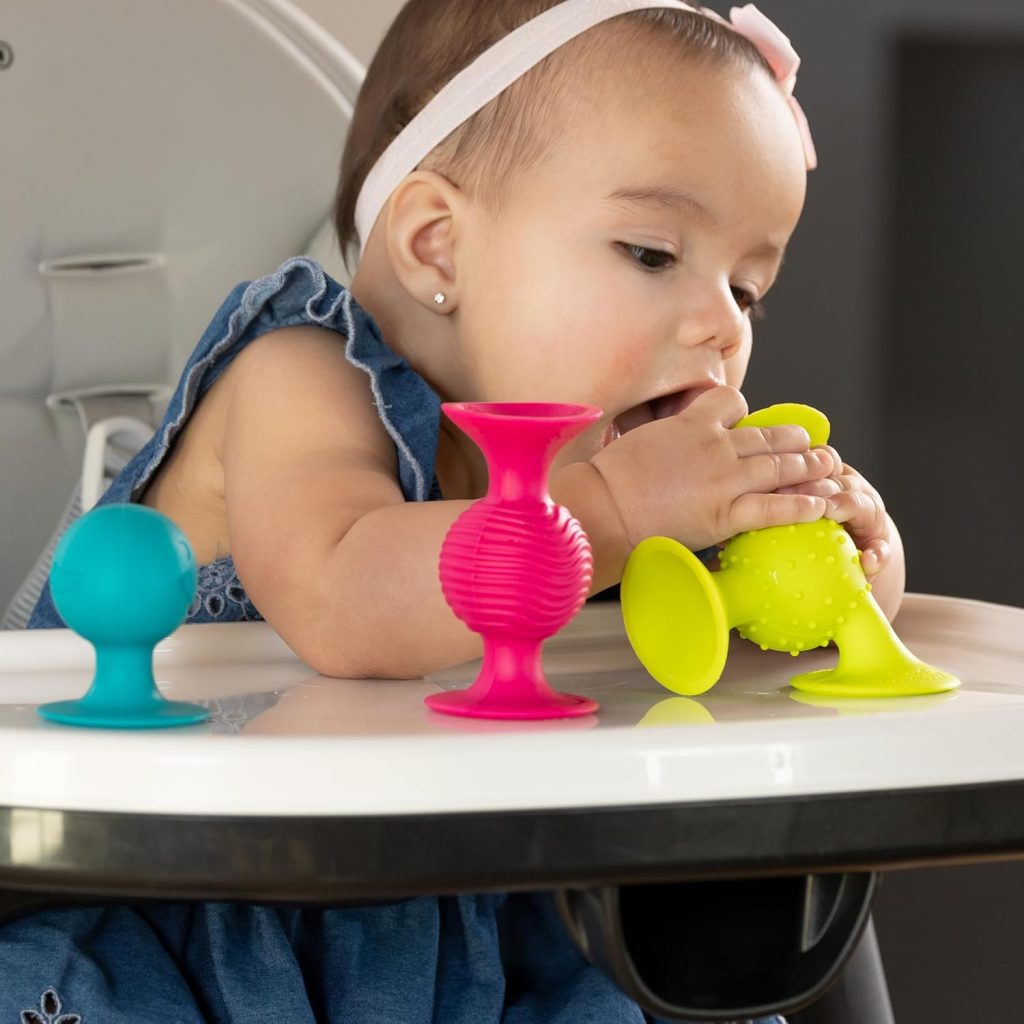
My surprising win came from the laundry basket. I had been trying to get him to play with his bulky plastic ball pit. One day, I took a simple kitchen whisk and a few felt balls, put them inside an empty laundry basket, and let him go to town. But the true game-changer for independent table play was the Fat Brain Toys PipSquigz. We stuck them to the highchair tray and he spent 15 minutes intently working his pincer grasp to peel them off and suction them back down—an unexpected win for a tool designed for fine motor skills and entertainment.
The Three Game-Changer Toys for 9 Month Old That Earned Their Keep
What your situation was like before applying this framework. (Emotional Honesty: Clutter, fussing, high anxiety).
A cluttered playpen. Baby would play for 2 minutes and then fuss. I felt like I was constantly rotating toys with zero success. High anxiety about hitting developmental milestones.
The messy, non-linear part of the journey. What was harder than expected?
Initially, the decluttering felt hard, like I was depriving him. The hardest part was realizing I was the one addicted to the shiny, new toy purchases, not him. The process involved intentionally limiting options and using The First Years Stack & Counts Stacking Cups and the Fat Brain Toys PipSquigz as the only two ‘official’ toys for a week.
The tangible results you achieved.
Focused playtime went from a 2-minute average to a 10-minute average (a 400% increase!). I achieved two full consecutive, hot coffees. The baby learned to self-direct his play, and my stress plummeted.
The First Years Stack & Count Stacking Cups
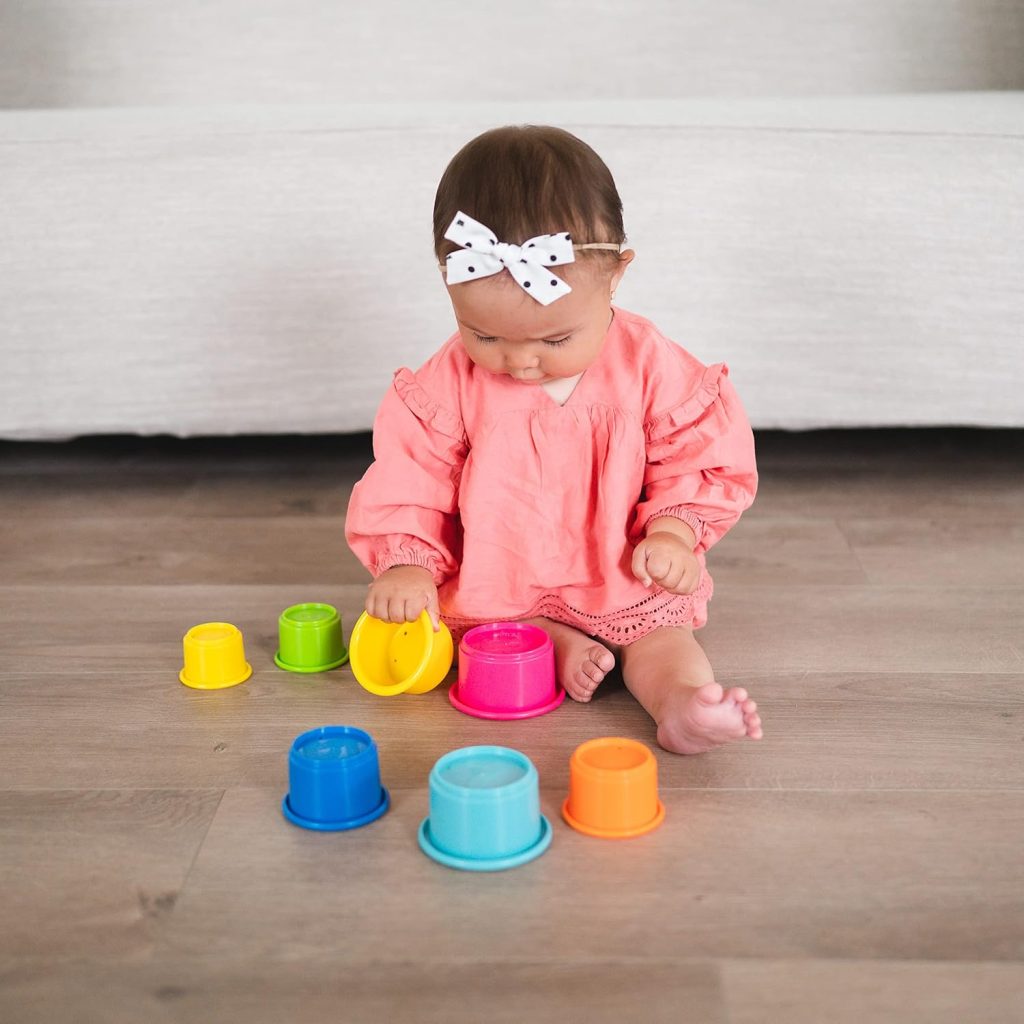
Before, my living room was a plastic junkyard, and I was convinced my baby was bored (or maybe Ih was). I had to learn to trust the silence. The messy part was resisting the urge to jump in and ‘help’ or suggest a new way to play. The tangible results? His sheer joy upon successfully separating two The first Years Stack & Count Stacking Cups for the first time was a priceless reward. More specifically, I now get 10-15 minutes of independent play every morning, which has saved my own sanity and let me feel like a capable parent, not a full-time entertainment director.
CONCLUSION
The best toys for 9 month old are the ones that are 90% baby, 10% toy. They are simple, they encourage action, and they honor the pure, brilliant focus of a baby on the cusp of major developmental milestones.
Stop feeling guilty for not having the most expensive toys. Your baby doesn’t need a hundred things; they just need a few things that truly work. Trust your gut and watch that face light up.
What’s the most unexpected household item your 9-month-old treats like a magical toy? Share your simple, surprising win in the comments below!
Leave a Reply