
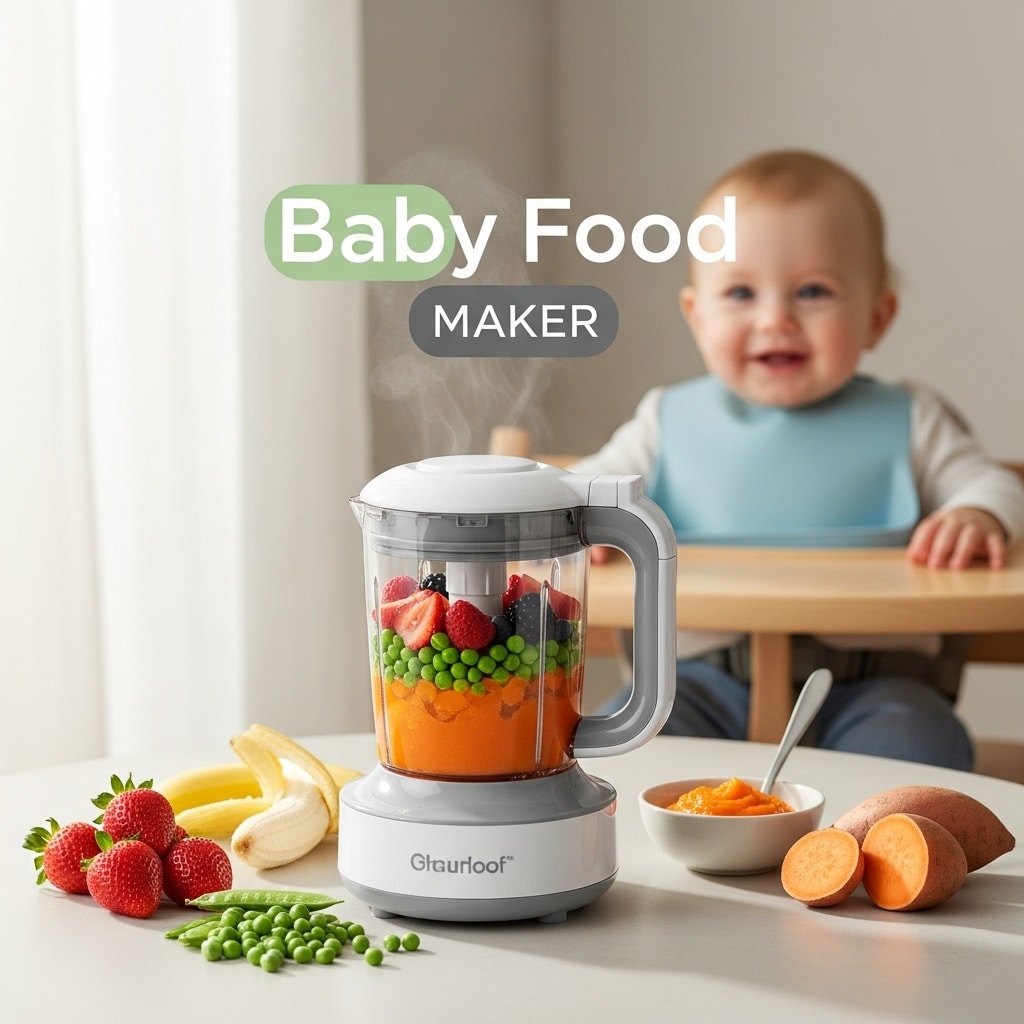
I’ll be honest: before I had my first child, I mocked the idea of a baby food maker. I remember seeing one on a friend’s registry and thinking, “Don’t you have a stove and a blender? Why do you need a $150 machine to do what a pot and a fork can do?” Then, I actually tried to make my own sweet potato puree using the “traditional” method.
I ended up with a sink full of steaming baskets, a blender that smelled like onions from the night before, and sweet potato splatter on my ceiling. Most importantly, I was exhausted. I realized very quickly that when you are a parent in 2025, you aren’t paying for a “puree machine,” you are paying for ten extra minutes of sleep and a kitchen that doesn’t look like a crime scene.
If you’re debating whether to add one to your counter, here is my unvarnished 2025 guide to finding the right baby food maker for your actual, messy life.
Affiliate disclosure: This post contains affiliate links! As an affiliate, I may receive a small commission at no extra cost to you. All opinions are my own. Thank you for supporting Blessed Cute Babies!
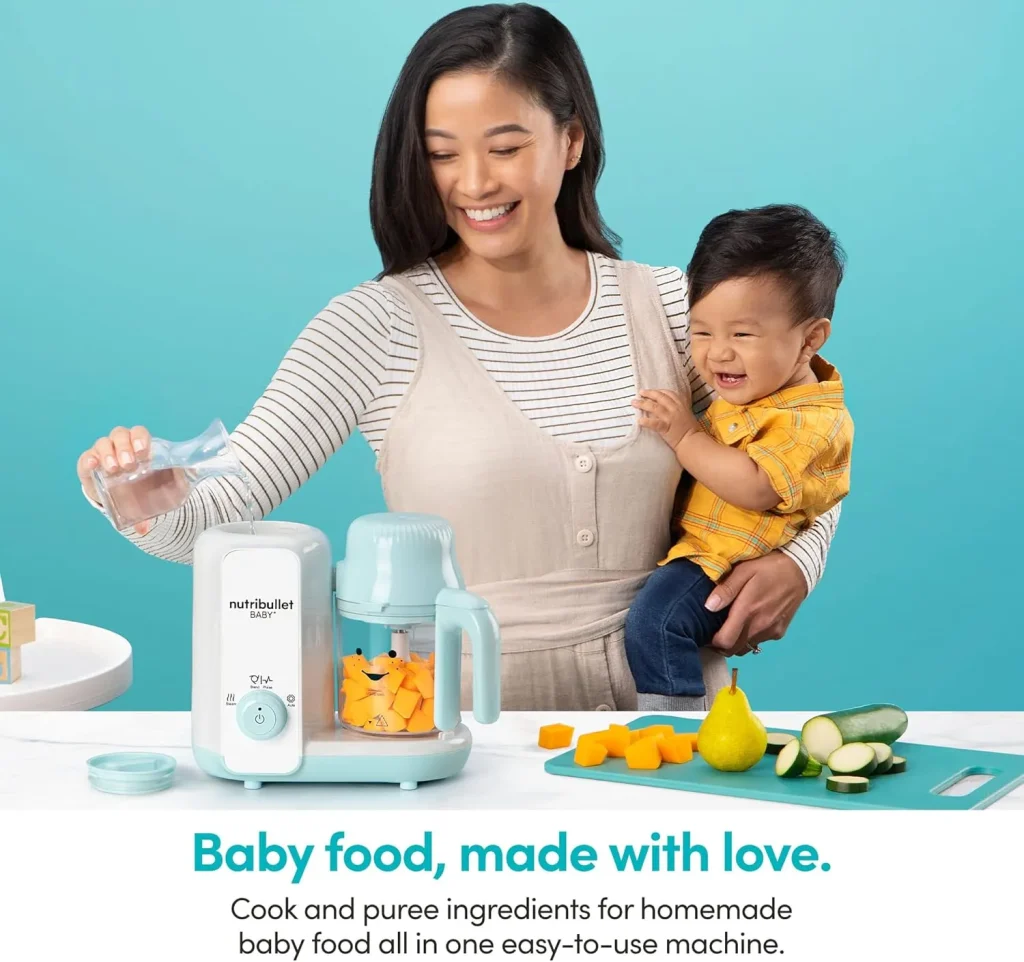
The “Counter Clutter” Dilemma: Is It Actually Worth It?
The common misconception is that a baby food maker is just a glorified blender. Most people think they can save the money and just use their NutriBullet or Vitamix.
I realized the common advice was wrong the day I tried to steam broccoli for my daughter while she was screaming in her high chair. I had to watch the pot so it wouldn’t boil dry, then transfer the dripping hot veg into a blender, then wash four different components.
My “Aha!” moment came when I saw a friend drop raw apples into a baby food maker, press one button, and walk away to change a diaper. The machine steamed them, then automatically blended them in the same bowl. No transfer. No boiling pots. No mess. That’s when I realized: It’s not about the food; it’s about the “Steam-to-Blend” workflow.
Affiliate Disclosure: As an affiliate, I earn from qualifying purchases. We purchased this set to provide a completely honest, hands-on review.
The 2025 Framework: How to Pick the Right One
After testing the top models currently on the market, I’ve realized that 90% of the features don’t matter. Only two things do.
1. The “Single Bowl” Workflow
If you have to move the food from a steamer basket to a blender jar, you’ve already lost the battle. The best machines do everything in one container.
- A Personal Mistake: I once bought a “budget” model that required me to flip the basket over mid-cycle. I didn’t seat the lid properly, and when the blade started, it sprayed boiling-hot pea juice all over my arm.
- The Lesson: In 2025, if the machine isn’t a true “one-and-done” (like the BEABA Babycook Solo or the Nutribullet Baby Steam + Blend), it’s not saving you enough time to justify the space.
2. The “Hidden Mold” Check
You need to look at the water reservoir. Some older designs have closed tanks you can’t see into, which are notorious for growing black mold over time.
- A Surprising Win: I recently tried the Babymoov Duo Meal Station. Not only is the tank easy to clean, but it actually has a “descale” alert that tells you when it’s time to deep-clean. For a sleep-deprived parent, having the machine handle its own maintenance is a massive win.
2025 Comparison: The Top 3 Contenders
| Model | Best For… | The “Real Talk” |
| BEABA Babycook Express | Speed-conscious parents | It’s the fastest on the market. Great for last-minute “I forgot to prep” moments. |
| Babymoov Duo Meal Station | The “Batch Cooker” | It has two tiers. You can steam salmon on top and sweet potato on the bottom. It’s huge, but it’s a workhorse. |
| Evla’s Baby Food Maker | The Eco-Conscious | It features a glass jar option, which many 2025 parents prefer over plastic to avoid BPA/BPS concerns. |
From Jars to Jars (of my own)
- The Before: I was spending roughly $120 a month on organic “stage 1” jars. They were convenient, but they all tasted… beige. Even the “kale and apple” tasted like vague, sweet cardboard.
- The Process: I started “Sunday Prep.” I would buy $10 worth of seasonal produce at the farmer’s market, throw it in the baby food maker, and freeze the results in silicone trays. The first time I made a beet and blueberry mash, it was messy, but the color was vibrant and it actually tasted like food.
- The After: I cut my monthly food spend by 70%. But more importantly, I knew exactly what was in his belly. No preservatives, no “heavy metal” concerns, just real carrots.
Summary
Buying a baby food maker isn’t an admission that you’re “extra.” It’s a tool for the parent who wants to provide fresh food without sacrificing their last shred of sanity.
The Key Takeaway: Look for a “one-handed” operation. You will almost certainly be holding a crying child with your left hand while trying to start the machine with your right.
My Heartfelt Advice: If you have the budget, go for a glass-jar model. In 2025, we’re seeing more data about microplastics, and since you’re heating the food in the jar, glass gives you that extra peace of mind.
What was the biggest “fail” you’ve had while trying to make homemade baby food? (Tell me I’m not the only one who has turned a kitchen orange!) Let’s laugh about it in the comments.
Leave a Reply