
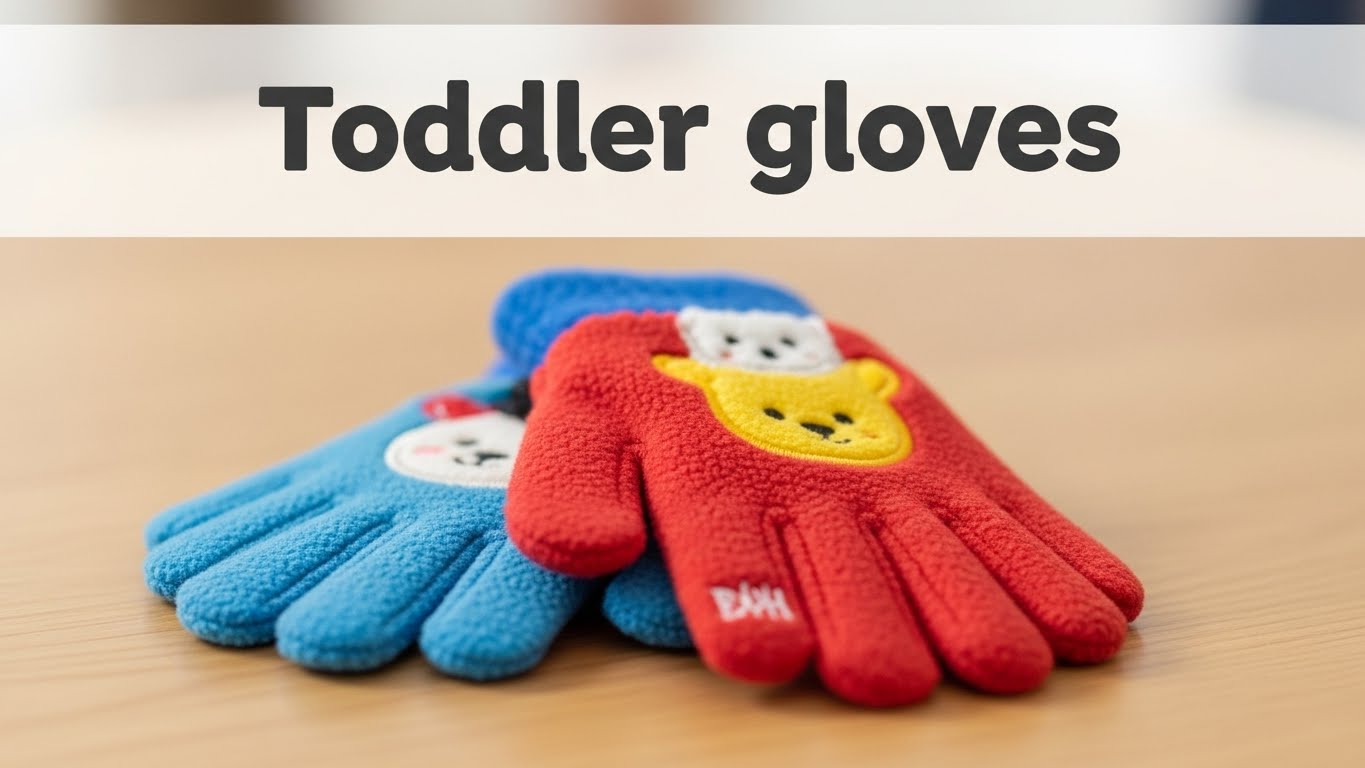
If you have ever spent thirty minutes layering a toddler in winter gear, only to look in the rearview mirror five minutes later and see a bare hand triumphantly waving at you, this post is for you.
Finding toddler gloves that stay on is the “Holy Grail” of winter parenting. Most gloves are either too bulky or too itchy or, most commonly, designed with a wrist opening so loose that a gentle breeze could knock them off.
After several winters of “single-glove graveyards” in my car and one too many frostbitten fingers, I did the deep dive into the engineering of toddler mittens. Here is what I learned about why most gloves fail and the specific ones that actually win the battle against toddler gravity.
Affiliate disclosure: This post contains affiliate links! As an affiliate, I may receive a small commission at no extra cost to you. All opinions are my own. Thank you for supporting Blessed Cute Babies!
Why Standard Gloves Are a Parenting Trap
Before we look at the winners, we have to acknowledge why the cheap knit gloves from the grocery store checkout lane are a waste of money:
- The “Soggy Sponge” Factor: Knit gloves soak up melting snow instantly, making hands colder than if they wore nothing at all.
- The Thumb Impossible: Trying to get a wiggly 2-year-old’s thumb into a specific hole is like trying to thread a needle during an earthquake.
- The Zero-Grip Wrist: Without a fastening mechanism, the weight of the glove simply pulls itself off the hand.
The 3 Features of a “Stay-On” Glove
If you want to stop the “one-glove-lost” cycle, look for these three specific design elements:
1. The “Extra-Long” Gauntlet
The biggest secret to keeping gloves on is length. You want gloves that don’t stop at the wrist; you want them to go halfway up the forearm. These are designed to be tucked under the jacket sleeve, creating a “lock” that prevents the toddler from reaching the cuff to pull them off.
2. The “Double-Lock” Cinch
Look for a glove that has at least one (ideally two) points of tension. Usually, this is an elasticated wrist combined with a sturdy Velcro strap. This allows you to tighten the glove specifically to your child’s wrist size.
3. The “No-Thumb” Design (for the under-2 crowd)
If your child is under 24 months, skip the thumb hole entirely. “Thumbless” mittens are significantly warmer because the fingers share body heat, and they are 100% easier to put on.
Affiliate disclosure: This post contains affiliate links! As an affiliate, I may receive a small commission at no extra cost to you. All opinions are my own. Thank you for supporting Blessed Cute Babies!
The Top Contenders for 2025/2026
Based on durability, warmth, and “escape-proof” ratings, these are the top choices for this winter:
| Brand/Model | Best For… | The “Stay-On” Secret |
| SnowStoppers Mittens | Heavy Snow Play | Features an extra-long knitted cuff that goes nearly to the elbow. |
| Stonz Baby/Toddler Mittz | Extreme Cold | Two adjustable toggles—one at the wrist and one at the top of the arm. |
| Zutano Fleece Mittens | Everyday Errands | A specialized “hidden” elastic wrist and high-quality fleece that clings to skin. |
| Outdoor Research Adrenaline | Professional Grade | A wraparound cinch strap that is virtually impossible for a toddler to undo. |
The Pro-Parent “Hack” for Putting Them On
Even the best gloves need a good strategy. Here is the “Jacket-Last” method:
- Put the gloves on first. Pull the long gauntlets up over the toddler’s bare forearms.
- Slide the jacket on second. The jacket sleeves will act as a secondary barrier, pinning the glove gauntlets against the arm.
- The “Velcro Sandwich”: If the jacket has Velcro cuffs, tighten them over the glove. This creates a seal that keeps snow out and gloves in.
Summary
You don’t have to accept a winter of cold hands and lost gear. By switching from standard knit gloves to long-gauntlet mittens with a cinch strap, you are solving the physics problem of toddler winter gear.
The best glove isn’t the most expensive one; it’s the one that is still on their hand when you get back to the front door.
Leave a Reply