
If you’ve ever stood over a baby bathtub, dipping your elbow in and out while feeling like a human thermometer, you aren’t alone. For new parents, the first few baths are less “bonding time” and more “high-stakes science experiment.” Is it too cold? Will they get a chill? Is it too hot? Will it hurt their delicate skin?
In 2026, we have more gadgets than ever, from smart ducks to digital floating thermometers, but the fundamental anxiety remains. Because a baby’s skin is up to three times thinner than an adult’s, what feels “comfortably warm” to you can be “painfully hot” to them.
To take the guesswork out of your evening routine, we developed the Baby Bath Temperature Checker. But before you dive into the tool, let’s look at the “why” and “how” of bath safety to ensure your little one stays safe, warm, and happy.
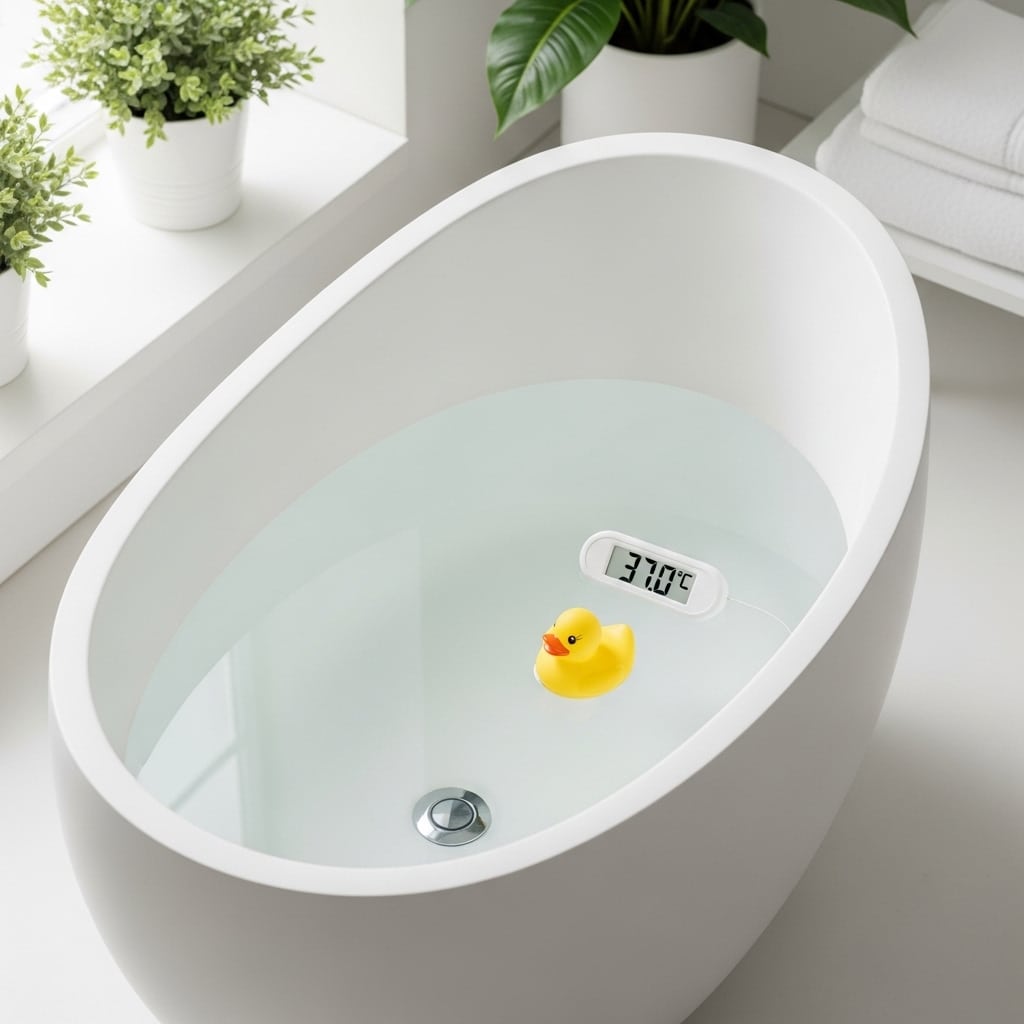
Why 37°C is the “Magic Number”
You’ll see the number 37°C (98.6°F) everywhere in parenting manuals. This isn’t an arbitrary choice. This is your baby’s natural core body temperature.
When the water is exactly 37°C, the baby doesn’t have to work to stay warm, nor do they feel the shock of excessive heat. It is the “thermal neutral” zone.
Understanding the Temperature Ranges
Our Baby Bath Temperature Checker uses these specific safety zones to help you decide if it’s time to add a splash of cold or a hint of warm:
- Below 36°C (Too Cold): Babies lose body heat nearly four times faster than adults. Water that is too cool can lead to “cold stress,” making the baby fussy, blue-lipped, or lethargic.
- 36°C to 38°C (The Sweet Spot): This is the safe zone. It’s warm enough to be relaxing but cool enough to prevent any risk of scalding.
- 38.1°C to 40°C (Proceed with Caution): While some toddlers might enjoy this warmth, for a newborn, this is pushing the limit. Always double-check with your wrist.
- Above 40°C (Danger Zone): Hot water can cause second-degree burns on a baby in less than a few seconds.
The Math of the Bath
If you find yourself with a thermometer that only reads in one unit, you can use these formulas to check the math manually:
Fahrenheit to Celsius:
$$T_c = (T_f – 32) \times \frac{5}{9}$$
Celsius to Fahrenheit:
$$T_f = (T_c \times \frac{9}{5}) + 32$$
The Biology of Baby Skin: Why the Risks are Real
As we move through 2026, pediatric dermatology has given us even more insight into why baby bath temperature is so critical. A baby’s skin barrier is still developing. It loses moisture faster and absorbs heat more quickly than ours.
- Lower Burn Threshold: Because the epidermis is thin, heat reaches the deeper layers of the skin faster. A temperature that might cause a “red mark” on you could cause a blister on a newborn.
- Poor Thermoregulation: Babies cannot shiver effectively to warm up, nor can they sweat efficiently to cool down. They are entirely dependent on the environment you create for them.
- The “Startle” Factor: If the water is even a few degrees off, it can trigger the Moro (startle) reflex. Once a baby associates the bath with a “scare” or discomfort, bath time battles can last for months.
How to Prepare the Perfect Bath: A Step-by-Step Guide
Even with a Baby Bath Temperature Checker, the order in which you prepare the bath matters for safety.
1. The “Cold First” Rule
Always run the cold water first, then add the hot. This prevents the bottom of the tub from becoming a “hot spot” that could burn the baby’s bottom even if the overall water temperature is okay.
2. The “Swirl” Method
Water settles in layers. Before testing the temperature, use your hand to swirl the water vigorously. This ensures there are no hidden pockets of scalding water at the bottom or corners.
3. The Physical Check (The Elbow Test)
Digital tools are fantastic, but they can fail (dead batteries, calibration errors). Always follow the Rule of Two:
- Check with the Baby Bath Temperature Checker.
- Verify with your elbow or the inside of your wrist. These areas have thinner skin than your hands and are more sensitive to heat. It should feel “pleasantly warm,” not “hot.”
4. Room Temperature Matters
In 2026, we focus a lot on the water, but the air is just as important. Ensure the bathroom is around 24°C to 26°C. A warm baby being lifted into a cold room is a recipe for a screaming, unhappy infant.
7 Pro-Tips for a Stress-Free Bath Time
- Depth Control: For newborns, you only need about 2 to 3 inches of water. You aren’t aiming for a deep soak; you’re aiming for a wash.
- The Towel Trick: Lay a warm, wet washcloth over the baby’s chest and stomach during the bath. This prevents them from feeling the “evaporative cooling” that happens to their exposed skin.
- Gather First: Never, ever leave a baby alone in the tub, not even for a second to grab a towel. Have everything (soap, towel, diaper, pajamas) within arm’s reach before the baby goes in the water.
- Frequency: In the first year, babies don’t actually need a bath every day. 2–3 times a week is usually enough to keep them clean without drying out their skin.
- Timing is Everything: Don’t bath a baby when they are starving or immediately after a full feeding (to avoid spit-ups). The “sweet spot” is usually mid-way between feedings.
- Gentle Products: Use pH-neutral, fragrance-free soaps. In 2026, many parents are moving toward “water-only” baths for the first few weeks to protect the natural skin flora.
- The “Pre-Heat”: Toss the baby’s towel in the dryer for 5 minutes or hang it over a warm radiator so they have a “warm hug” waiting for them the moment they leave the water.
Frequently Asked Questions (FAQ)
1. What if my baby hates the bath even at 37°C?
Some babies find the sensation of “floating” or being naked scary. Try a “swaddle bath,” wrap them loosely in a thin muslin cloth and lower them into the water. It makes them feel secure.
2. Is it safe to use a “big” tub?
It’s better to use a dedicated baby tub or a clean sink for the first few months. Big tubs are harder to keep at a consistent temperature and are much harder on your back!
3. My thermometer says 39°C, but my elbow says it’s okay. Which do I trust?
Trust the lower of the two or wait for the water to cool. If there is a discrepancy, always err on the side of “cooler is safer.”
4. How long should the bath last?
For a newborn, 5 to 10 minutes is plenty. Any longer and the water will start to cool down significantly, which can lead to the baby getting chilled.
5. Can I use “smart home” sensors for bath time?
While 2026 offers many smart home integrations, they should only be used as a secondary check. Nothing replaces the physical presence and touch-test of a caregiver.
Conclusion: Confidence in Every Drop
Bath time should be one of the best parts of your day—a time for splashes, smiles, and the “new baby smell” we all love. By using the Baby Bath Temperature Checker and following the 37°C rule, you can remove the “danger” factor and focus on the “delight” factor.
Remember: you are the best judge of your baby’s comfort. If they seem unhappy, change the routine. If they are shivering, warm it up. If they are turning red, cool it down.
Ready to test your water? Enter your reading into the tool above to see if you’ve hit the “Safe Temperature” mark.
Leave a Reply