
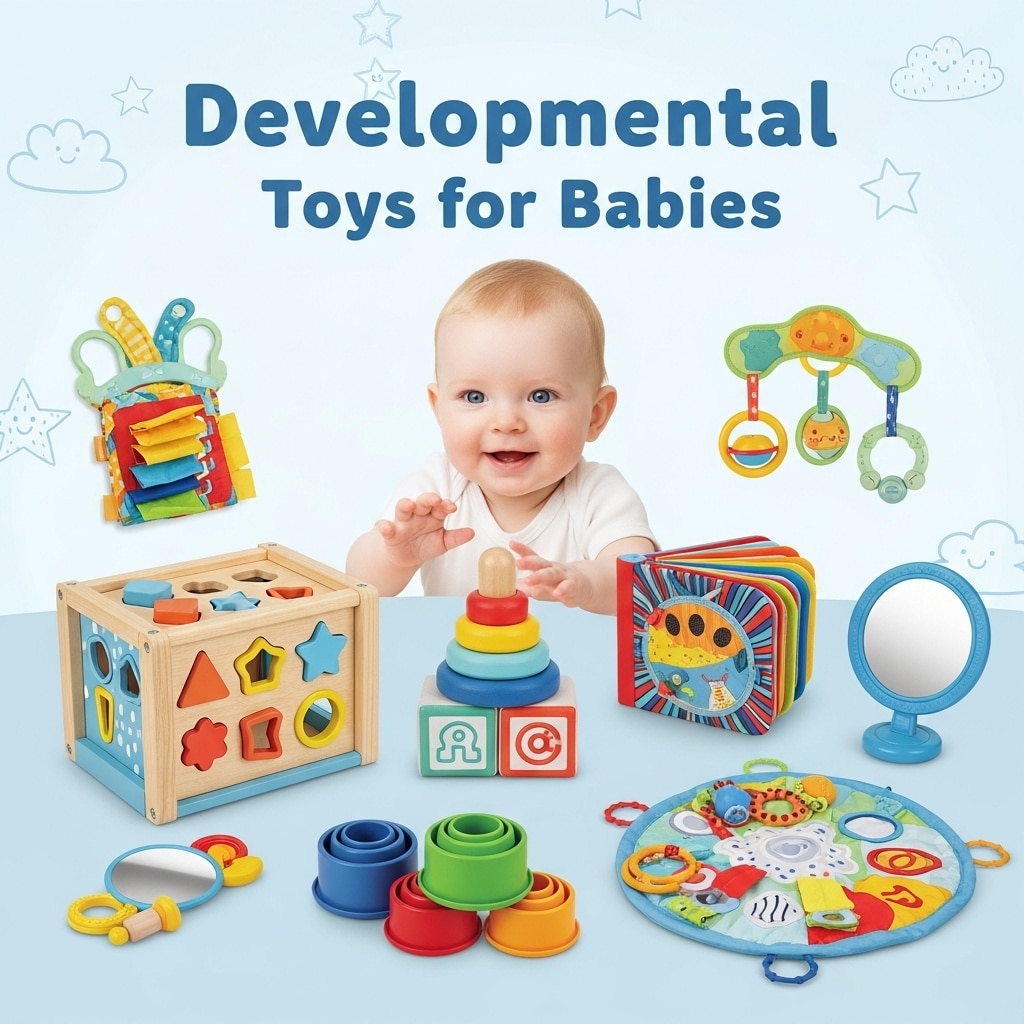
Before I had kids, I spent hours curating a Pinterest board called “Montessori Nursery.” It was a sea of muted earth tones, organic wooden blocks, and sleek, open shelving. I was convinced that by selecting the right developmental toys for babies, I was essentially coding my child for future success in a STEM field by age three.
Then my daughter was born.
I remember the specific moment the illusion shattered. It was her first Christmas. My living room was a graveyard of expensive, “scientifically-backed” wooden puzzles and high-contrast flashcards. Where was she? She was in the corner, intensely happy, chewing on a piece of crinkly red wrapping paper and trying to fit a plastic measuring cup inside an empty Amazon box.
I had spent hundreds of dollars on “brain-building,” and she was getting a masterclass in physics from a piece of trash.
The truth is, the toy industry is very good at selling us “smart” gadgets, but babies have been developing perfectly fine for millennia without Wi-Fi-enabled rattles. If you’re feeling overwhelmed by the sheer volume of plastic and promises out there, here is my honest look at the developmental toys for babies that actually earned their keep in our house.
The Core Problem: The “Genius Baby” Marketing Trap
The common misconception is that if a toy doesn’t beep, light up, or speak three languages, it isn’t “teaching” your baby anything. We’ve been conditioned to think more features equals more brain cells.
I realized the common advice was wrong when I watched my son play with a “Learning Table” that sang the alphabet. He didn’t learn the alphabet; he just learned to push the button to get the noise. He was passive. The moment I replaced it with a simple basket of different fabric scraps (silk, wool, cotton), he became active. He was feeling, pulling, and comparing. That’s when it clicked: The best toys are 10% toy and 90% child.
Affiliate Disclosure: As an affiliate, I earn from qualifying purchases. We purchased this set to provide a completely honest, hands-on review.
The Personal Framework: What Actually Works?
When I shop for toys now, I ignore the “educational” labels and look for “open-endedness.” Here are the two categories that actually saw daily use.
Step 1: High-Contrast & Sensory (The 0–6 Month Winners)
In the beginning, their world is a blur. You don’t need much, but what you have should be high-impact.
- The Winner: Lamaze Freddie the Firefly. This thing is a classic for a reason. It has mirrors, crinkly wings, and clinking rings.
- A Personal Mistake: I bought a gorgeous, hand-painted wooden mobile that cost a little dollar. It was “aesthetic,” but it was too high up and too pale for him to see. He ignored it for six months while I stared at it and regretted my bank account balance.
- The Lesson: At this stage, if it isn’t high-contrast (black, white, red) or doesn’t make a “crinkle” sound, they probably won’t care.
Step 2: Object Permanence & Cause-Effect (The 6–12 Month Winners)
This is when they start realizing that when things go away, they still exist.
- The Winner: Lovevery Play Kits (specifically the Object Permanence Box). A Surprising Win: A simple whisk with large pom-poms stuffed inside. My son spent forty minutes, forty minutes! Trying to dig those pom-poms out of the whisk. It cost me little dollar. It developed his fine motor skills better than any “busy board” I ever bought.
- The Lesson: Challenge beats entertainment. If the toy does the work, the baby doesn’t have to.
The “Hype” vs. The “Reality”
| The “Hype” (What I thought I needed) | The “Reality” (What they actually played with) | Why? |
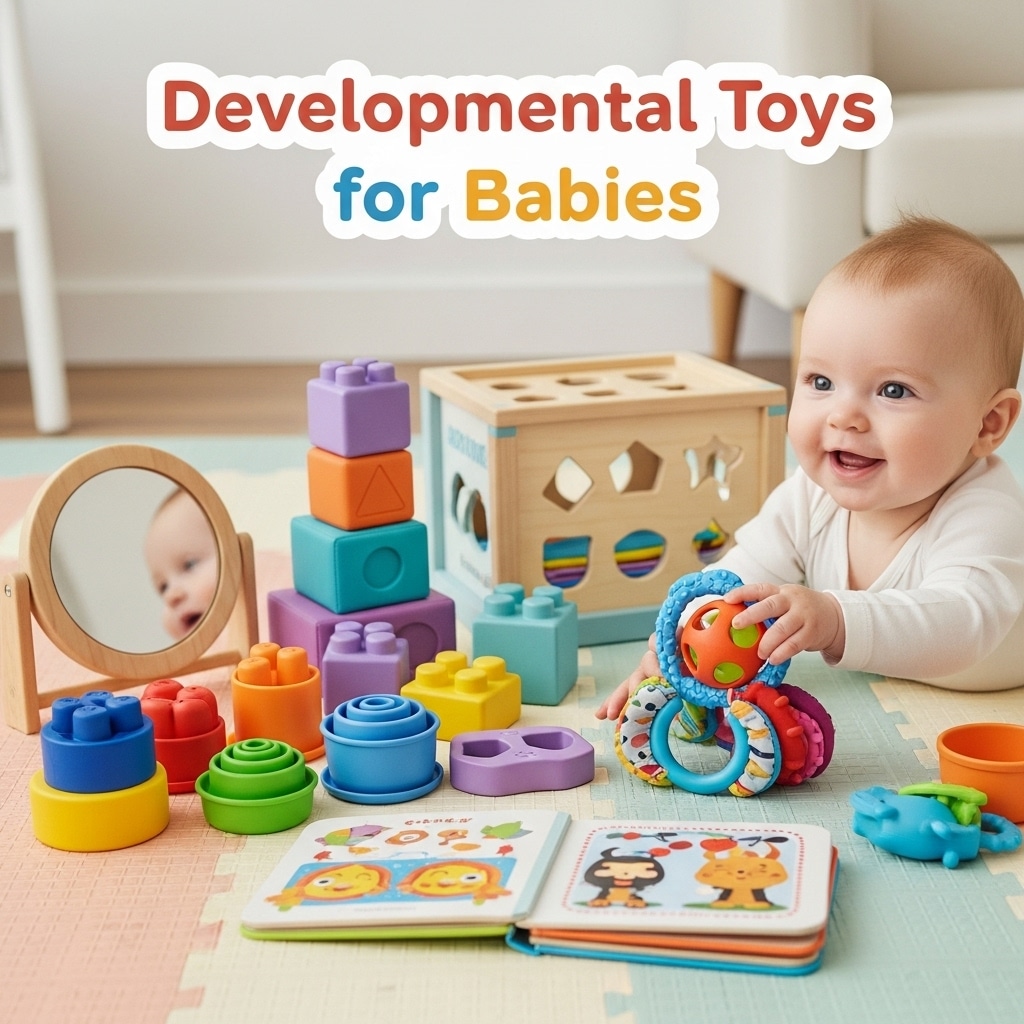
| Electronic Learning Tablet | Stacking Cups (Stacking & Nesting) | Cups can be used in the bath, the sand, for building towers, or for hiding snacks. |
| Expensive “Activity Center” | A Low Mirror & Pull-up Bar | Seeing their own reflection is the ultimate “developmental” game. |
| Plush Musical Stuffed Animals | Silk Scarves / Play Silks | Scarves are “peek-a-boo” machines, capes, and blankets all in one. |
The Great Toy Purge of 2023
- The Before: My living room looked like a toy store exploded. My kids were overwhelmed, constantly dumping bins and walking away within two minutes.
- The Process: I did the “Toy Rotation” method. I put 70% of the toys in the garage and only left out 5-6 items. I felt like a “mean mom” at first. What if they got bored? What if I was stunting their growth?
- The After: Something miraculous happened. Because they had fewer choices, they played deeper. They turned the wooden blocks into “food.” They spent twenty minutes mastering a single shape sorter. My house was quieter, and their play was actually more complex.
Summary
If you want the best developmental toys for babies, look in your kitchen cabinet first. A wooden spoon and a metal bowl teach more about sound, reflection, and motor control than most plastic gadgets ever will.
The Key Takeaway: Your baby isn’t looking for a “genius-maker.” They are looking for a tool to understand the world. The simpler the tool, the more work their brain has to do.
My Heartfelt Advice: Don’t let the “Instagram Nursery” make you feel inadequate. Your baby doesn’t need a $400 wooden gym; they need a safe space on the floor and a parent who isn’t too stressed out by toy clutter to play with them.
What is the one “junk” item in your house that your baby loves more than their actual toys? Is it the remote? The keys? Let’s share our “accidental” favorite toys in the comments!
Leave a Reply