
It’s 3:00 PM. The house is quiet, the laundry is halfway done, and your baby is staring at you with that “I’m ready for something, but I don’t know what” look. You’ve already done the “I’m gonna get your nose” bit ten times. You’ve walked through every room in the house pointing at the ceiling fan.
Decision fatigue in parenting is a real phenomenon. When you are operating on four hours of broken sleep, coming up with creative playtime ideas for babies feels like trying to solve a complex physics equation.
The secret to successful play isn’t buying the most expensive light-up toy in the store. It’s about matching the activity to two things: Developmental Age and Current Mood. That is exactly why we built the Baby Activity Ideas Generator. It takes the guesswork out of the “afternoon slump” and turns a potential meltdown into a moment of connection.

The Science of “Just Playing”
For a baby, play is their full-time job. Every time they shake a rattle, they are learning about cause and effect. Every time they track a moving toy with their eyes, they are strengthening their ocular muscles.
In 2026, child development experts emphasize that “high-quality play” is the most significant predictor of future cognitive success. When we talk about playtime ideas for babies, we are really talking about “Synapse Building.”
- Brain Growth: Between birth and age three, the brain forms more than one million new neural connections every second.
- Emotional Regulation: Play teaches babies how to handle frustration (like when a block tower falls) and joy.
- Motor Skills: From the “pincer grasp” to crawling, every movement is a building block for physical independence.
Decoding the “Mood Menu”
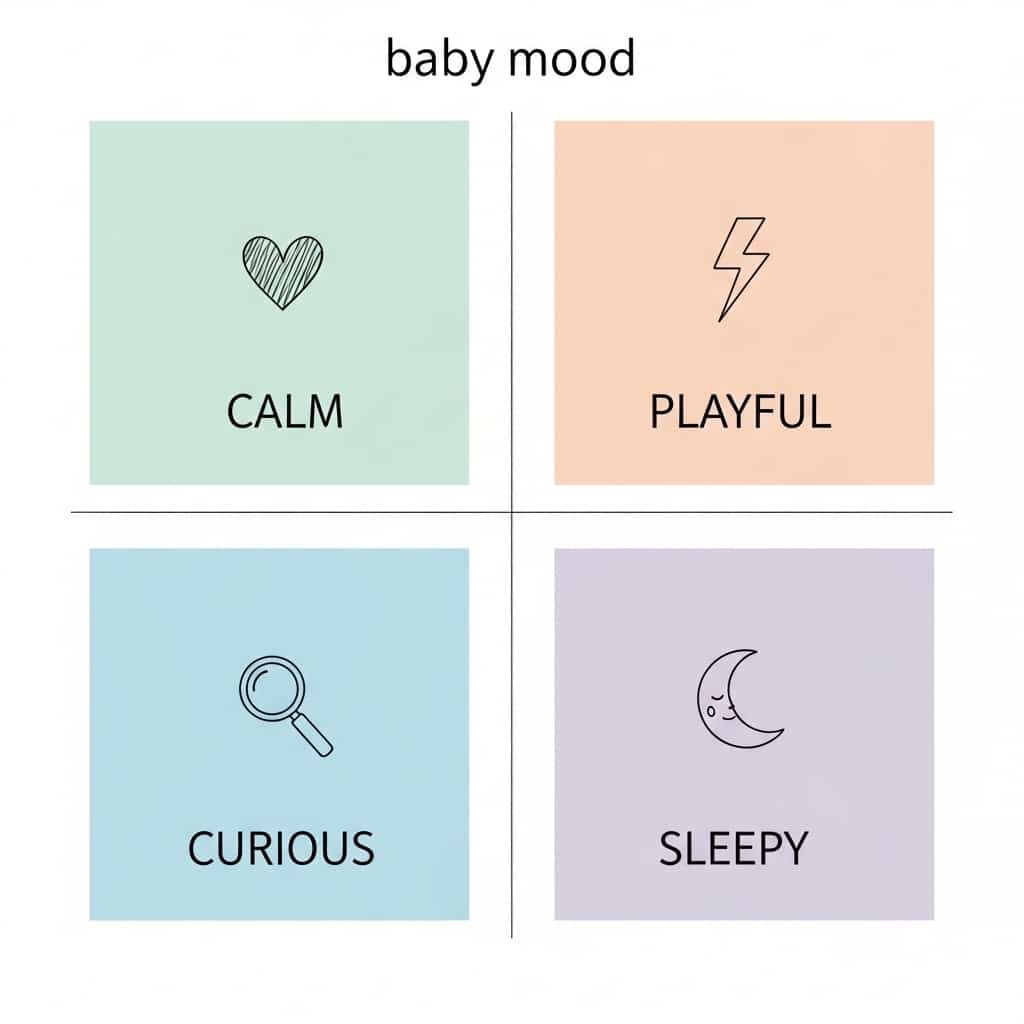
One of the biggest mistakes we make is trying to force an energetic activity on a “Calm” baby, or a “Curious” activity on a “Sleepy” baby. To get the most out of your day, you have to read the room.
1. The Calm / Relaxed Mood
This is the window for bonding and gentle sensory input. This isn’t the time for loud music or jumping. It’s the time for gentle baby massage or soft singing.
2. The Playful / Energetic Mood
Your baby has “gas in the tank.” They are kicking their legs or waving their arms. This is when the bicycle legs or mini obstacle courses (for older babies) work best. If you don’t burn this energy off now, it usually turns into “fussy energy” later.
3. The Curious / Exploring Mood
The baby is quiet but alert. They are watching your hands or reaching for items. This is the prime time for cause-and-effect toys or introducing safe household objects like a wooden spoon or a crinkly piece of paper.
4. The Sleepy / Wind-down Mood
The most critical time. The goal here is “sensory reduction.” Dim the lights, use soft textures, and focus on rhythmic sounds.

Playtime by the Numbers: The Age Breakdown
Our Baby Activity Ideas Generator segments suggestions into four key stages. Each stage represents a massive leap in what a child’s body and brain can handle.
Stage 1: The “Newborn to Sitter” (0–6 Months)
At this stage, the world is a blur of light, shadow, and sound.
- Focus: Visual tracking and neck strength.
- Pro-Tip: “Mirror play” is a goldmine here. Babies aren’t born knowing what they look like. Seeing a “friend” in the mirror is endlessly fascinating and encourages them to lift their heads during tummy time.
Stage 2: The “Explorer” (6–12 Months)
They are likely sitting up, scooting, or crawling. Their hands are now tools.
- Focus: Fine motor skills and “Object Permanence” (knowing things exist even when they can’t see them).
- Pro-Tip: This is the golden age of Peek-a-boo. It’s not just a game; it’s a psychological lesson in trust and memory.
Stage 3: The “Tornado” (12–24 Months)
Welcome to the toddler years. They have opinions, they have speed, and they have a desire for independence.
- Focus: Language development and large motor skills.
- Pro-Tip: “Helping with chores” is actually play for a 1-year-old. Putting toys in a basket or “dusting” with a clean cloth makes them feel like a capable part of the tribe.
Stage 4: The “Imagineer” (24+ Months)
The world of “Pretend” opens up.
- Focus: Social-emotional learning and complex problem-solving.
- Pro-Tip: Use your playtime ideas for babies generator to find activities that involve “roles.” Pretend kitchens or mini obstacle courses help them navigate the world’s rules in a safe environment.
Why You Don’t Need More “Stuff”
In the quest for playtime ideas for babies, we often look toward Amazon or toy stores. But some of the most developmental play happens with things you already own.
The “Boring” Toy Rule: A toy that does only one thing (like a plastic phone that says “Hello” when you press a button) is only interesting for five minutes. A toy that does nothing (like an empty cardboard box) can be a car, a house, a drum, or a tunnel.
Household items that double as high-end developmental tools:
- Plastic Tupperware: Great for stacking, “drumming,” and hiding objects inside.
- Laundry Baskets: Turn them into a “boat” for a toddler or a “ball pit” for a sitter.
- Metal Spoons: Perfect for teething and exploring the concept of “cold” vs. “warm.”
- Mashed Potato/Flour: (With supervision) Sensory play that is edible and safe.
Using the Generator to Beat “Parental Burnout”
The reason we created the Baby Activity Ideas Generator is simple: parenting is hard. Some days, you just don’t have the mental energy to be a “Pinterest Parent.”
By using the tool, you outsource the “creative thinking” to us. You just select the age, read the baby’s vibe, and hit “Generate.” Whether it’s a gentle baby massage for a calm morning or a dance party for a rainy energetic afternoon, you have an instant plan of action.
Safety: The Unspoken Playmate
No guide on playtime ideas for babies would be complete without a safety check. In 2026, we have more toys than ever, but the basics of safety remain the same:
- The Toilet Paper Roll Test: If an object (or a part of a toy) can fit through a toilet paper roll, it is a choking hazard for babies under age 3.
- Supervision is Key: “Water play” is a brilliant sensory activity, but it requires 100% focused attention, even in just an inch of water.
- Check the Paint: For DIY projects like “painting with toddlers,” always ensure you are using non-toxic, washable paints. Everything ends up in the mouth eventually.
Frequently Asked Questions (FAQ)
1. What if my baby doesn’t like the activity?
That’s perfectly normal! Babies have “thresholds.” If they turn their head away, start rubbing their eyes, or begin to fuss, they are telling you they are over-stimulated. Stop the activity and move to a “Sleepy / Wind-down” mood.
2. How much “screen time” should be in my play routine?
For babies under 18 months, experts generally recommend zero screen time (except for video chatting with family). For toddlers 18–24 months, high-quality educational programming should be limited to less than 1 hour a day and should be “co-viewed” with a parent to explain what’s happening.
3. My baby just wants to play with the box, not the toy inside. Is that okay?
It’s more than okay, it’s brilliant! The box allows for “Open-Ended Play,” which is much better for brain development than “Closed-Ended Play” (toys with only one way to use them).
4. How long should a “play session” last?
For a newborn, 5–10 minutes might be all they can handle. For a toddler, a deep play session might last 20–30 minutes. Always follow your baby’s lead rather than a clock.
5. Can I use the generator for multiple kids?
Yes! If you have a 1-year-old and a 3-year-old, generate an activity for the 1-year-old and see how the 3-year-old can “lead” or “help.”
Final Thoughts: The Goal is Connection, Not Perfection
At the end of the day, your baby doesn’t care if the playtime ideas for babies you chose were from a world-class book or a 2-second generator. They care about the fact that you are looking at them, talking to them, and engaging with their world.
The Baby Activity Ideas Generator is here to give you that extra bit of inspiration when your own “battery” is low. Use it to find a new game, explore a new texture, or just find a way to make the hour before bedtime a little more peaceful.
Don’t let the afternoon slump win. Choose your baby’s age and mood in the tool above, and let’s find your next great memory together.
Leave a Reply