
I’ll never forget the “Christmas of the Robot.”
It was 2021. My son was just turning three, and I had convinced myself that he needed this expensive, battery-operated robot dog that walked, barked, and supposedly “learned” tricks. It cost me $60, which, let’s be honest, is a fortune in toddler economy.
Christmas morning came. He tore open the box, shrieked with delight, and turned it on. The robot barked. My son laughed. The robot walked in a circle. My son watched.
Five minutes later? The robot was lying on its side, buzzing angrily against the wall, and my son was in the kitchen, happily banging a wooden spoon against a cardboard box. The robot never got played with again. The box, however, became a castle, a race car, and a spaceship over the next week.
That was my wake-up call.
As parents, we want to give our kids the world. But usually, we just end up giving them expensive plastic landfill fodder. If you are tired of wasting money on “hot” trends that end up at the bottom of the toy bin, this post is for you.
Here is my honest, battle-tested guide to finding toys for 3 year old boys that are affordable, genuinely educational, and durable enough to survive a preschooler’s chaotic energy.
(Disclosure: This post contains affiliate links! As an affiliate, I may receive a small commission at no extra cost to you. I purchased this product myself to provide a completely honest review. All opinions are my own. Thank you for supporting Blessed Cute Babies!)
Why Passive Toys Make for Active Chaos
We need to talk about the biggest lie in the toy aisle: the “Educational” label.
For a long time, I thought “educational” meant the toy had to do something. It needed to flash lights, sing the alphabet, or quiz my son on colors. But I realized something important during the Great Robot Debacle.
When a toy does all the work, the child’s brain turns off.
If the car drives itself, the boy doesn’t have to push it. If the doll talks on its own, the boy doesn’t have to imagine a voice for it. These are passive toys. And when a 3 year old boy is engaged in passive play, his physical energy isn’t being used. That energy builds up until it explodes, usually in the form of climbing your curtains or wrestling the cat.
The “Aha!” Moment
My perspective shifted when I read about the concept of “90% Child, 10% Toy.”
The best toys are essentially just tools. They are boring on their own. They don’t do anything until the child touches them. But because they require effort, they burn mental and physical energy. They create deep play. And surprisingly, these “boring” toys are almost always cheaper than the electronic ones.
My 3-Step Filter for Buying Toddler Gear
I don’t buy anything anymore without running it through this filter. It has saved me hundreds of dollars and saved my living room from becoming a graveyard of abandoned plastic.
The “One-Hit Wonder” Test (Open-Endedness)
If a toy can only be used in one specific way, it stays on the store shelf.
My Mistake: I once bought a specific branded “movie set” track for a specific type of car. It looked cool, but you could only build it one way. Once my son built it, he was done. There was no creativity required.
The Fix: I look for open-ended play items. Can this block be a phone? A sandwich? A tower? If the answer is yes, it goes in the cart.
Step 2: The “Thump” Factor (Durability vs. Price)
3 year old boys are scientists, but their method of testing gravity is dropping things on your hardwood floors. Repeatedly.
If a toy feels brittle, it’s not affordable, it’s a rental.
A Surprising Win: One of our best investments was a set of generic magnetic tiles (like PicassoTiles, which are half the price of the name brand). They have been stepped on, thrown down stairs, and used as ramps for Hot Wheels. They are virtually indestructible and offer endless “sneaky STEM” learning about geometry and magnetism.
Step 3: The “Sneaky STEM” Approach
You don’t need to buy a “Coding Caterpillar” to teach STEM. You just need mechanics.
My Favorite Hack: Go to the hardware store. Seriously.
For about $15, I bought a bag of PVC pipe elbow connectors and short pipes. My son spent an entire rainy Sunday connecting them to make “water pipes” and “telescopes.” It taught him more about engineering and fitting parts together than any blinking electronic toy ever did.
From 5-Minute Attention Spans to Deep Play
Let’s look at a real-world case study: My living room, circa last Tuesday.
The Before:
My son was in a mood. He was bouncing off the walls, whining that he was bored, despite being surrounded by action figures. I was trying to write an email, and he was literally hanging off my leg. The TV was on in the background (Paw Patrol, inevitably), adding to the overstimulation.
The Process:
I did a “Toy Detox.” I grabbed a laundry basket and swept all the battery-operated, flashing, noisy toys into it and put them in the closet. The room was suddenly quiet.
I pulled out a bin of wooden unit blocks and a handful of small plastic animals. I sat on the floor for two minutes and started a stack. “I wonder if this is a zoo or a jail for dinosaurs?” I asked.
I walked away.
The After:
He didn’t just play; he entered a flow state. For 45 minutes—I timed it—he built a sprawling complex. He had to balance the blocks (physics), count the animals (math), and create a narrative about a dinosaur escape (literacy).
The tangible result for me? I drank a cup of coffee while it was actually hot. The result for him? He was calm, regulated, and proud of his creation.
The Best Budget-Friendly Picks We Actually Own
If you’re looking for specific toys for 3 year old boys that pass the test, here are my top affordable recommendations:
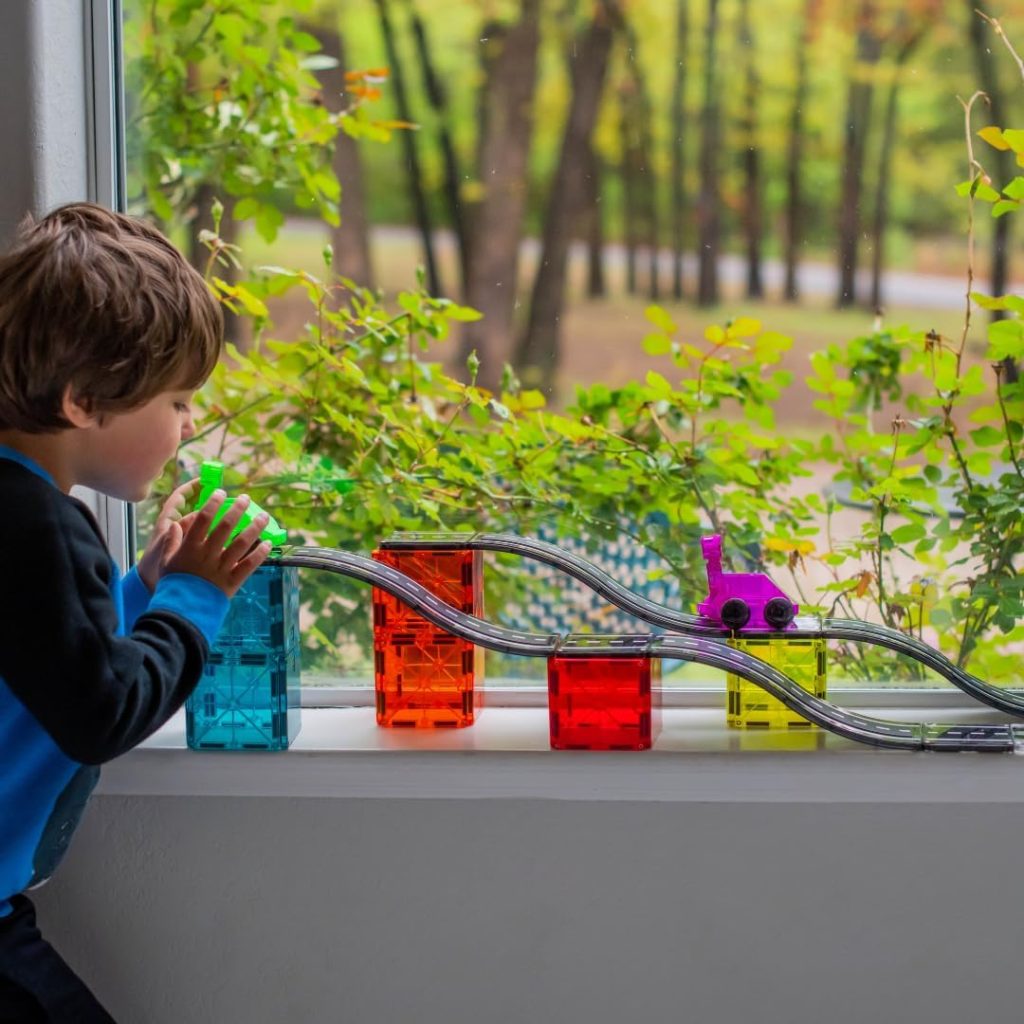
- Magnetic Tiles (Generic Brands): The MVP of preschool toys.
- Kinetic Sand: Great for sensory play, easier to clean than real sand.
- A Real Tape Measure: Get a small, locking one. Boys love measuring things.
- Wooden Train Tracks: You can find huge buckets of these used on marketplace sites.
- A “Loose Parts” Box: A container filled with large nuts, bolts, and washers (supervise for safety, obviously, but 3-year-olds usually stop putting things in their mouths by this stage).
CONCLUSION
The pressure to buy the “perfect” gift is real, but I promise you this: Your son does not need the $100 robot.
He needs tools that trust his intelligence. He needs things he can break, build, and experiment with. The best toys for 3 year old boys aren’t the ones that perform for them; they are the ones that invite them to perform.
So, next time you’re browsing online or walking the aisles, ask yourself: Is this toy 90% child, or 90% battery?
I’d love to hear from you: What is the weirdest, cheapest thing your son plays with for hours? Let me know in the comments below (bonus points if it’s literally a cardboard box or a kitchen spatula).
Leave a Reply